

Quick Summary
- Over-the-counter sprays are dangerous for pets because they’re designed to be broadcast across open surfaces — exactly where your dog or cat walks, licks, and naps.
- Professional “crack and crevice” application targets pests where they live (inside walls, baseboards, and voids) while keeping the product physically away from your pets.
- Knowing when it’s safe for pets to return, what ingredients to ask about, and how to vet your exterminator are the three things that separate a safe treatment from a scary one.
You’ve got ants in the kitchen. Or maybe something worse. And your first instinct is to protect your home — but your second instinct, almost immediately, is to protect your dog or cat.
That’s not overthinking it. That’s good parenting.
We get this call all the time here in Morris County. And honestly? We understand the hesitation better than most exterminators do — because we go home every night to Eddie and Archie, our two cats. When we’re deciding how to treat a home, we’re thinking about our own animals too.
Here’s what we want you to know: pest control done right is safe for your pets. The key word is done right. Let us show you exactly what that means.
Why Store-Bought Sprays Are the Real Danger
Before we talk about what’s safe, let’s talk about what isn’t.
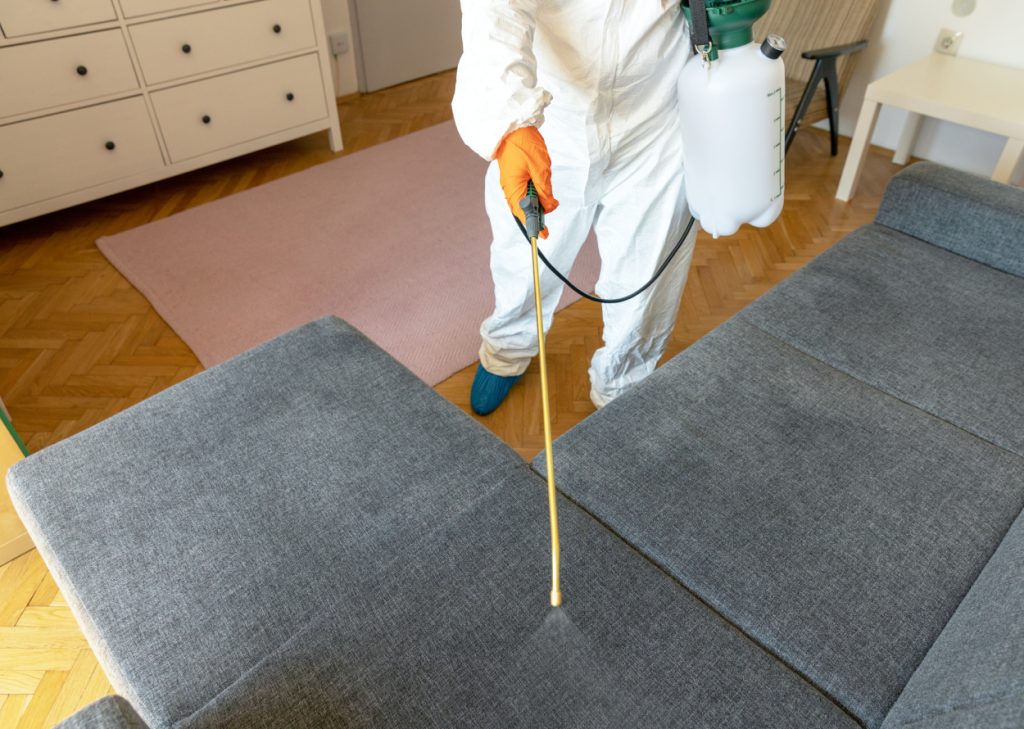
When you grab a can of bug spray off the hardware store shelf and mist it along your baseboards, you’re doing what’s called broadcast spraying — covering a wide, open surface with a chemical film. That film dries. It looks invisible. And then your dog walks through it, licks his paw, and you have a problem.
Think of it this way: that spray was designed to kill insects on contact. It doesn’t know the difference between a cockroach’s leg and your cat’s tongue.
The ASPCA Animal Poison Control Center handles tens of thousands of pesticide exposure calls every year. The majority involve over-the-counter products — not professional treatments.
That’s not a coincidence. It’s a method problem.
The Crack & Crevice Method: Why It’s Different
Professional pest control — the kind we use in our interior residential pest treatments — relies on a completely different approach called crack and crevice application.
Here’s the idea: pests don’t live out in the open. Cockroaches hide inside your walls. Ants travel along plumbing pipes. Silverfish nest in the voids behind your baseboards. So instead of spraying surfaces your pet touches, we inject product directly into the spaces where pests actually live.
The applicator tip goes into a crack. The product stays in the crack. Your pet never touches a treated surface.
It’s the difference between mopping your entire kitchen floor with chemicals versus injecting them behind the cabinet toe-kick where the ants are nesting. Same result — the pests are gone. Completely different risk profile for your animals.
What to Ask Your Exterminator Before They Start
Not every pest control company applies the product the same way. Here’s a quick checklist to run through before anyone treats your home:
- “Will you be doing crack and crevice application, or broadcast spraying?” If they can’t answer clearly, that’s a red flag.
- “What active ingredients are you using, and are they EPA-registered for indoor residential use?” A licensed professional should be able to name the product and hand you the label.
- “How long should my pets stay out of treated areas?” The standard answer for most low-toxicity products is 30–60 minutes after the application dries, but this varies by product and application zone.
- “Are you licensed in New Jersey?” Seth holds NJ certifications in CORE, 7A, and 7B — the state-required credentials for residential pest applications. Always ask.
If an exterminator gets annoyed by these questions, find a different one.
How Long After Treatment Is It Safe for Pets?
This is the most common question we get — and the honest answer is: it depends on the product and where it was applied.
For most professional-grade, low-toxicity treatments applied via crack and crevice:
- Liquid treatments: Keep pets out of the treated room until the application has fully dried, typically 30–60 minutes.
- Gel baits (commonly used for eliminating cockroach hiding spots safely): These are placed deep inside cracks and cabinets — pets almost never contact them, and re-entry time is essentially immediate.
- Perimeter treatments (exterior): Wait until the product dries completely, usually 1–2 hours depending on humidity.
When we treat a home in Morris County, we walk every client through the exact re-entry timeline before we leave. You’ll never have to guess.
What If My Pet Licks Dried Pest Control Spray?
First — don’t panic. The toxicity risk of a dried, professionally applied product is dramatically lower than a wet one, especially with crack and crevice methods where surface contact is minimal.
That said, if your pet is showing symptoms — drooling, vomiting, trembling, or acting disoriented — call the ASPCA Animal Poison Control Center at (888) 426-4435 or your vet immediately. Have the product name ready.
This is also why we always leave behind the product label and SDS (Safety Data Sheet) after every treatment. You should be able to hand that document to your vet in seconds if you need to.
The Pet-Safe Pest Control Checklist (Before, During & After)
Before the Treatment:
- Remove food and water bowls from treatment areas
- Put away pet toys, blankets, and bedding
- Secure your pets in a room that won’t be treated, or arrange for them to be out of the home
During the Treatment:
- Keep pets away from the technician’s work area
- Ask the technician to confirm which areas were treated and with what product
After the Treatment:
- Wait for the confirmed re-entry time before letting pets back into treated areas
- Ventilate the space (open windows) if any odor is present
- Wash food bowls and pet bedding if they were accidentally left in a treated area
Why “Pet-Safe” Has to Be More Than a Marketing Phrase
Here’s our honest take: a lot of pest control companies slap “pet-friendly” on their website because it sounds good. It’s a marketing line, not a methodology.
For us, it’s personal. Eddie and Archie are in our home. Our daughter Annabelle is in our home. We’re not going to use application methods in your house that we wouldn’t use in ours.
That’s the difference between a family-owned company and a national franchise. When you ask us about our pet-safe application protocols, you’re talking directly to the people who designed them — not a call center reading from a script.
We’re a BBB-accredited, Nextdoor Neighborhood Favorite serving Morris County and the surrounding communities of Flanders, Long Valley, Randolph, Rockaway, and beyond. We offer free estimates, and we’re always happy to walk you through exactly what we’ll use and how we’ll use it before we ever start.
Conclusion & Next Steps
You don’t have to choose between a pest-free home and a safe one for your animals. The right approach — targeted application, the right products, and a technician who actually explains what they’re doing — gives you both.
If you’re dealing with an active infestation and want to talk through your options, give us a call or request a free estimate. We’ll tell you exactly what we’d do, why we’d do it, and when it’s safe to let Eddie (or your Eddie) back in the room.
Call or Request a Free Estimate
Veteran & senior discounts available. Warranties available. Serving Morris, Sussex, and Warren Counties, NJ.
Frequently Asked Questions
How long after pest control spray is it safe for dogs and cats?
For most professional-grade treatments applied via crack and crevice, pets can safely return to treated areas once the product has fully dried — typically 30 to 60 minutes for liquid applications. Gel baits placed inside cracks and cabinets have virtually no re-entry wait time. Your technician should give you a specific timeline before leaving.
What pest control ingredients are toxic to pets?
The most dangerous ingredients for pets in over-the-counter products include pyrethrins and pyrethroids (especially toxic to cats), organophosphates, and rodenticides containing brodifacoum or bromadiolone. Professional-grade products used in crack and crevice applications are typically low-toxicity, EPA-registered formulations — always ask your technician for the product name and label before treatment begins.
Do pet-safe pest control methods actually work as well as traditional chemicals?
Yes — and in many cases, better. Crack and crevice application delivers product directly into the harborage zones where pests actually live and breed, rather than coating open surfaces. This means more targeted elimination and longer-lasting results, with significantly less chemical exposure for your family and pets.
 Why Trapping Mice Fails: The Science of Structural Rodent Exclusion