
Professional Snake Control Services in Northwest New Jersey
Veteran and Senior Discounts | Warranties Available | Free Quotes
Northwest New Jersey—encompassing Morris, Sussex, and Warren Counties—is home to 22 native snake species, including two medically significant venomous snakes: the Northern Copperhead and the state-endangered Timber Rattlesnake. Snake activity in this region peaks from April through October, with increased human encounters near rocky ridges, wooded lots, and lakefront properties where rodent populations (their primary prey) are abundant. Understanding species identification, seasonal behavior, and humane removal protocols is essential for homeowner safety and compliance with New Jersey wildlife protection laws.
Need Professional Snake Control in Your Area?
If you’re dealing with a snake intrusion or want to prevent future encounters, our licensed wildlife control specialists provide immediate response and long-term solutions throughout Northwest NJ.
Emergency Snake Removal Services:
- Snake Removal in Morris County – Serving Lake Hopatcong, Parsippany, Morristown, and surrounding areas
- Snake Control in Sussex County – Covering Sparta, Vernon, Hopatcong, and Lake Mohawk communities
- Warren County Snake Removal Specialists – Protecting homes in Hackettstown, Washington, and the Highlands Region
Related Wildlife & Prevention Services:
- Eliminate the rodent food source – Comprehensive rodent control to remove snake attractants
- Seal foundation gaps and entry points – Professional wildlife exclusion and home sealing
Attic cleanup after wildlife intrusion – Restoration services for contaminated spaces
Common Snake Species in Morris, Sussex & Warren Counties
Understanding which snakes inhabit Northwest New Jersey helps homeowners distinguish between harmless species and those requiring immediate professional attention.
Venomous Species (Medical Attention Required)
Northern Copperhead (Agkistrodon contortrix mokasen)
The Northern Copperhead is the most commonly encountered venomous snake in Northwest NJ. Adults reach 24–36 inches and display distinctive hourglass-shaped crossbands in copper, tan, and brown tones. They prefer rocky, wooded hillsides and are frequently found near stone walls, woodpiles, and abandoned foundations. Copperheads are ambush predators that remain motionless when threatened, making accidental encounters more likely. While their venom is rarely fatal to healthy adults, bites require immediate medical evaluation.
Timber Rattlesnake (Crotalus horridus)
The Timber Rattlesnake is a state-endangered species protected under New Jersey law. These large snakes (36–60 inches) are identified by their dark chevron bands, yellow or gray base color, and distinctive rattle. They inhabit remote, rocky ridges—particularly near Schooley’s Mountain, Jenny Jump State Forest, and the Highlands Region. Timber Rattlesnakes are docile and will retreat when given the opportunity, but their venom is medically significant. It is illegal to kill, harass, or relocate this species without proper permits. All encounters must be handled by licensed professionals in compliance with NJ DEP regulations.
Non-Venomous Species (Beneficial Wildlife)
Black Rat Snake (Pantherophis obsoletus)
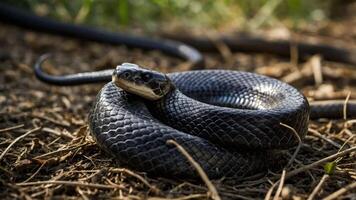
The Black Rat Snake is the largest snake in New Jersey, reaching lengths of 42–72 inches. Adults are glossy black with white chin markings. These excellent climbers are often found in barns, attics, and tree cavities where they hunt rodents. Despite their intimidating size, they are non-venomous and beneficial for natural pest control.
Northern Water Snake (Nerodia sipedon)
Frequently misidentified as Copperheads due to their dark crossbands, Northern Water Snakes are non-venomous and common near Lake Hopatcong, Budd Lake, and other waterways. They are heavy-bodied, aggressive when cornered, and feed primarily on fish and amphibians. Their defensive behavior often causes unnecessary alarm, but they pose no venomous threat.
Eastern Milk Snake (Lampropeltis triangulum)
Milk Snakes display red, black, and white/yellow banded patterns that mimic venomous species—a defensive strategy called Batesian mimicry. They are docile, secretive, and beneficial rodent predators commonly found in basements, crawlspaces, and under debris piles.Eastern Garter Snake (Thamnophis sirtalis)
The most abundant snake in Northwest NJ, Garter Snakes commonly are small (18–26 inches), feature three yellow stripes along their bodies, and are completely harmless. They inhabit gardens, lawns, and wetland edges where they feed on earthworms, slugs, and small amphibians.
Why Snakes Enter Homes in Northwest NJ
Snake intrusions are rarely random. Understanding the ecological and structural factors that attract them is the first step toward permanent prevention.
The Prey Vector: Following the Food Source
Snakes are obligate carnivores that follow rodent populations. If you have mice, chipmunks, or voles living in or near your foundation, you are creating an ideal hunting ground for snakes. Properties near wooded areas, bird feeders, or overgrown vegetation are particularly vulnerable. Eliminating the rodent population is the single most effective snake deterrent.
Structural Vulnerabilities
Most snake intrusions occur through gaps and openings that homeowners don’t realize exist:
- Weeping Holes: The small gaps in brick veneer designed for moisture drainage are large enough for juvenile snakes to enter.
- Foundation Cracks: Settling foundations create entry points near basement windows and utility penetrations.
- HVAC Line Sets: The gaps around air conditioning lines and dryer vents are common entry routes.
- Crawlspace Vents: Damaged or missing vent screens allow snakes to access the underside of homes.
- Stone Foundations: Older homes with fieldstone or rubble foundations have countless gaps that are nearly impossible to seal without professional intervention.
Seasonal Behavior Patterns
Spring Emergence (April–May): Snakes leave their hibernacula (overwintering sites) and are actively searching for food and mates. This is when most basement intrusions occur, as snakes follow scent trails left by rodents that denned indoors during winter.
Summer Activity (June–August): Snakes are most active during early morning and evening hours. They seek cool, dark spaces during midday heat—including basements, garages, and shaded crawlspaces.
Fall Denning (September–October): As temperatures drop, snakes search for secure hibernation sites. Homes near rocky ridges or wooded slopes may experience increased activity as snakes migrate toward traditional denning areas.
Identifying Venomous vs. Non-Venomous Snakes
Accurate identification is critical for safety and legal compliance. Misidentifying a protected Timber Rattlesnake or killing a beneficial non-venomous species can result in fines and ecological harm.
Key Identification Markers for Venomous Pit Vipers
Both the Northern Copperhead and Timber Rattlesnake belong to the pit viper family and share these characteristics:
- Triangular Head Shape: A distinct, arrow-shaped head wider than the neck.
- Heat-Sensing Pits: Small depressions located between the eye and nostril, used to detect warm-blooded prey. This is the most reliable distinguishing feature of pit vipers and can be observed from a safe distance.
- Distinctive Body Patterns: Copperheads display hourglass-shaped crossbands in copper and tan tones, while Timber Rattlesnakes feature dark chevron bands and a segmented rattle at the tail tip.
Note: While venomous snakes often have triangular-shaped heads, some non-venomous species flatten their heads defensively to mimic this appearance. Pattern recognition from a safe distance is more reliable than head shape alone.
Common Misidentifications
Northern Water Snake vs. Copperhead: Water snakes have dark, irregular crossbands that narrow toward the spine, while Copperhead bands are hourglass-shaped and wider on the sides. Water snakes also lack the triangular head and heat pits.
Milk Snake vs. Copperhead: Milk Snakes have distinct red bands (Copperheads do not). Their pattern is segmented into rings, not hourglass shapes.
When to Call a Professional Immediately
Do not attempt to handle, capture, or kill any snake if you observe:
- Triangular head shape or heat-sensing pits
- A rattle or buzzing sound (Timber Rattlesnake warning)
- Defensive posturing (coiled body, open mouth, hissing)
- Uncertainty about species identification
If bitten, seek emergency medical care immediately. Do not attempt to capture or kill the snake for identification—modern hospitals treat all snake bites with a universal protocol, and attempting to handle the snake increases the risk of secondary bites.
The Professional Snake Removal Process
Humane, compliant snake removal requires specialized training, equipment, and an understanding of both animal behavior and structural vulnerabilities.
Step 1: Emergency Extraction
Licensed wildlife control specialists use snake tongs, hooks, and secure transport containers to safely capture and remove the animal. Venomous species are handled with additional safety protocols, including the use of snake bags designed to prevent escape and bite-through.
Step 2: Species Identification & Documentation
Accurate identification determines the next steps. Non-venomous species are typically relocated to suitable habitat away from residential areas. Timber Rattlesnakes, as a state-endangered species, must be reported to the NJ Division of Fish & Wildlife and relocated only by permitted professionals to approved sites.
Step 3: Comprehensive Site Inspection
The removal is only half the solution. A thorough inspection identifies:
- Active rodent populations (droppings, gnaw marks, burrows)
- Structural entry points (foundation gaps, weeping holes, utility penetrations)
- Habitat attractants (woodpiles, rock walls, overgrown vegetation near the foundation)
Step 4: Exclusion & Structural Sealing
Professional exclusion work uses materials that snakes cannot penetrate:
- Copper Mesh & Hardware Cloth: Installed in weeping holes, foundation cracks, and crawlspace vents.
- Expanding Foam & Sealant: Applied to gaps around utility lines and HVAC penetrations.
- Foundation Barriers: Buried hardware cloth or metal flashing prevents burrowing access.
Step 5: Prey Vector Control
If rodent activity is detected, a coordinated control plan eliminates the food source that attracted the snake in the first place. This may include trapping, exclusion, and sanitation recommendations.
New Jersey Snake Protection Laws & Regulations
Understanding the legal framework surrounding snake removal is essential for compliance and conservation.
Important: All native snakes in New Jersey are legally protected under the New Jersey Endangered and Nongame Species Conservation Act (N.J.S.A. 23:2A-1-13). It is illegal to kill, harm, harass, or collect any snake species in the state—regardless of whether they are venomous or non-venomous. Violations can result in significant fines and criminal charges.
State-Endangered Species Protections
The Timber Rattlesnake is protected under the New Jersey Endangered and Nongame Species Conservation Act (N.J.S.A. 23:2A-1 et seq.). It is illegal to:
- Kill, harm, or harass Timber Rattlesnakes
- Destroy or disturb known hibernacula (denning sites)
- Relocate individuals without a permit from the NJ Division of Fish & Wildlife
Violations carry significant fines and potential criminal charges. Homeowners who encounter Timber Rattlesnakes must contact licensed wildlife control operators who hold the appropriate state permits.
General Wildlife Control Regulations
All snake removal in New Jersey must comply with N.J.A.C. 7:25-5 (Wildlife Control Operator Permit Rules). Only licensed professionals are authorized to trap, handle, and relocate wildlife. Homeowners who attempt DIY removal risk:
- Injury from bites or defensive strikes
- Legal liability for killing protected species
- Ineffective solutions that result in recurring intrusions
Why Professional Compliance Matters
Working with a licensed, insured wildlife control operator ensures:
Liability protection for property owners
Legal adherence to state and federal wildlife laws
Humane treatment of all species
Proper documentation and reporting for endangered species encounters
Long-Term Snake Prevention Strategies
Permanent snake control requires a multi-layered approach that addresses habitat, structure, and prey availability.
Habitat Modification
Reduce Cover & Shelter:
- Relocate woodpiles, rock piles, and debris at least 30 feet from the foundation
- Trim overgrown shrubs and ground cover near the home
- Remove ivy, English ivy, and other dense vegetation that provides hiding spots
Eliminate Rodent Attractants:
- Store birdseed in sealed metal containers
- Clean up fallen fruit and nuts from trees
- Secure garbage in rodent-proof bins
- Remove outdoor pet food dishes at night
Structural Sealing
Foundation Work:
- Seal all cracks wider than ¼ inch with mortar or expanding foam
- Install hardware cloth over weeping holes (maintains drainage while blocking entry)
- Repair or replace damaged crawlspace vents
Utility Penetrations:
- Seal gaps around air conditioning line sets, electrical conduits, and plumbing penetrations
- Install door sweeps on exterior doors (especially garage and basement doors)
- Repair damaged window screens and foundation vents
Landscape Management
Create a “Snake-Free Zone”:
- Maintain a 3-foot gravel or mulch barrier around the foundation (snakes avoid open, exposed areas)
- Keep grass mowed short (less than 3 inches) within 10 feet of the home
- Remove decorative stone walls or borders directly against the foundation
Water Management:
Ensure proper grading to direct water away from the foundation
Eliminate standing water sources (clogged gutters, low spots in the yard)
Repair leaking outdoor faucets and irrigation systems
Regional Snake Behavior Patterns in Northwest NJ
Understanding local ecology helps homeowners anticipate and prevent encounters.
Lake Hopatcong & Waterfront Properties
Northern Water Snakes are abundant near boat houses, docks, and retaining walls along Lake Hopatcong, Budd Lake, and other waterways. They are often seen basking on rocks or swimming near the shoreline. While non-venomous, they are defensive and will bite if cornered. Waterfront properties should focus on sealing gaps in boathouses, docks, and lakefront structures where these snakes seek shelter.
Schooley’s Mountain & Rocky Ridge Habitats
The rocky ridges of Schooley’s Mountain, Sparta Mountain, and the Highlands Region are prime Timber Rattlesnake habitat. These areas contain traditional hibernacula—deep rock crevices where snakes overwinter in large communal groups. Homes built near these ridges may experience seasonal migration activity in spring and fall. If your property borders forested ridges or rocky outcroppings, professional exclusion work is strongly recommended.
Delaware Water Gap Corridor
The Delaware Water Gap and surrounding state forests serve as wildlife corridors for multiple snake species. Properties in western Warren County near the Pennsylvania border may encounter Black Rat Snakes, Garter Snakes, and occasional Copperheads moving through the landscape. These areas benefit from perimeter exclusion and rodent control to reduce attractants.
Our Snake Removal Service Area
Affordable Pest Solutions provides emergency snake removal, species identification, and wildlife exclusion services throughout Northwest New Jersey. Our licensed specialists respond quickly to protect your family and property while ensuring full compliance with NJ DEP wildlife regulations.
We serve the following areas:
Snake on Your Property? Don’t Wait.
Venomous or not, DIY snake handling is dangerous and often illegal in NJ. Our licensed specialists provide immediate removal with accurate identification and humane protocols.
Same-day response across Morris, Sussex & Warren Counties. We eliminate both the snake and the conditions attracting it—rodent control + structural sealing for permanent prevention.
Frequently Asked Questions About Snake Control
How quickly can you respond to a snake in my home?
We provide priority emergency dispatch for snake removals throughout Morris, Sussex, and Warren Counties. Most emergency calls receive same-day service, with response times under 2 hours for venomous species encounters. Our specialists are available 24/7 during peak snake season (April–October).
Will you kill the snake?
No. We follow humane, NJ DEP-compliant protocols for all snake removals. Non-venomous species are relocated to suitable habitat away from residential areas. Venomous species are handled according to state regulations, with Timber Rattlesnakes relocated only to approved sites under proper permits. Killing snakes is illegal in many cases and eliminates beneficial rodent predators from the ecosystem.
How much does snake removal cost?
We charge a standard diagnostic dispatch fee to get a licensed specialist to your property immediately. If exclusion or structural sealing work is required, we provide a customized quote on-site based on the scope of entry points and necessary repairs. Transparent pricing ensures you understand the investment in permanent prevention—not just a temporary fix.
Do I really need to seal my home, or can you just remove the snake?
Simply removing the snake without addressing entry points and prey attractants creates a recurring problem. Snakes follow scent trails left by rodents, and if the conditions that attracted the first snake remain, others will follow. Professional exclusion work eliminates the pathways and food sources, providing long-term protection and peace of mind.
Is it dangerous to have snakes near my property?
Most snake species in Northwest NJ are non-venomous and beneficial for controlling rodent populations. However, venomous species (Copperheads and Timber Rattlesnakes) do pose a medical risk, particularly to children, pets, and individuals with compromised immune systems. Professional identification and removal eliminate the guesswork and ensure safety.
What should I do if I see a snake in my yard?
Maintain a safe distance (at least 6 feet) and do not attempt to handle, capture, or kill the snake. Most snakes will retreat if given space and an escape route. If the snake is inside your home, near a high-traffic area, or displays defensive behavior, call a licensed wildlife control operator immediately. Take a photo from a safe distance if possible—this helps with species identification.
Can snakes climb walls or enter through second-story windows?
Yes. Black Rat Snakes are excellent climbers and can scale brick, stucco, and even vinyl siding to access attics, soffits, and upper-story entry points. They are often found in attics hunting rodents or seeking warm, secure spaces. Any gaps near the roofline, gable vents, or soffit intersections should be sealed as part of a comprehensive exclusion plan.